Evening Star
A three-candle reversal: a large green candle, a small undecided candle, then a large red candle. The rise loses its force.
Where it matters
Most meaningful at a major resistance zone after a clear rise.
Faded candles are the trend before it, the band is the pattern, the dashed line is the level it formed at, and ✓ marks the confirming candle.
How to read it
- 01
How it forms
Candle 1 is a large green candle. Candle 2 has a small body. Candle 3 is a large red candle that closes below the middle of candle 1.
- 02
Where it matters
Most meaningful at a major resistance zone after a clear rise.
- 03
What confirms it
The third candle itself is the confirmation; follow-through below its low adds to it.
- 04
Where the idea is wrong
A close above the high of the middle candle (the “star”).
- 05
What volume should do
The third candle ideally carries the highest volume of the three.
- 06
Common mistake
Reading it in the middle of a range, where there is no rise to reverse.
Read it next
Opposite pattern
Morning Star
Most meaningful at a major support zone after a clear decline.
Single Candle
Bullish Marubozu
Most meaningful when it breaks out of a range or closes above a resistance level. Inside a choppy range it says much less.
Single Candle
Bearish Marubozu
Most meaningful when it breaks below a support level or a range. Inside a range it is often just noise.
From the book
Read the full chapter in the book.
Chapter 11 of Trading Candlestick Patterns explains the Evening Star with real Indian market charts, volume context and stop-loss placement.
 Buy on Amazon — ₹300
 Buy on Flipkart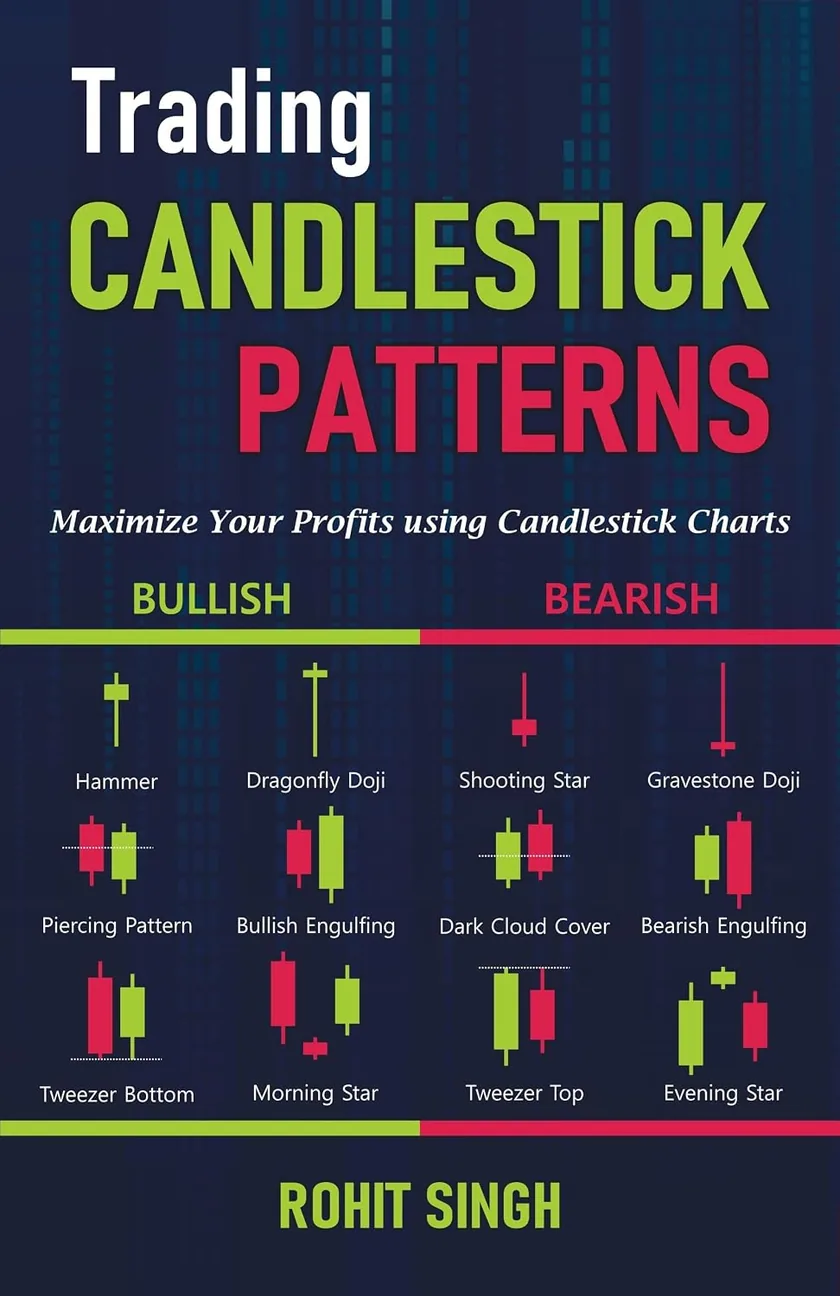
Educational content only. A pattern describes what buyers and sellers did; it does not predict what price will do next. Not investment advice or a buy, sell or hold recommendation.