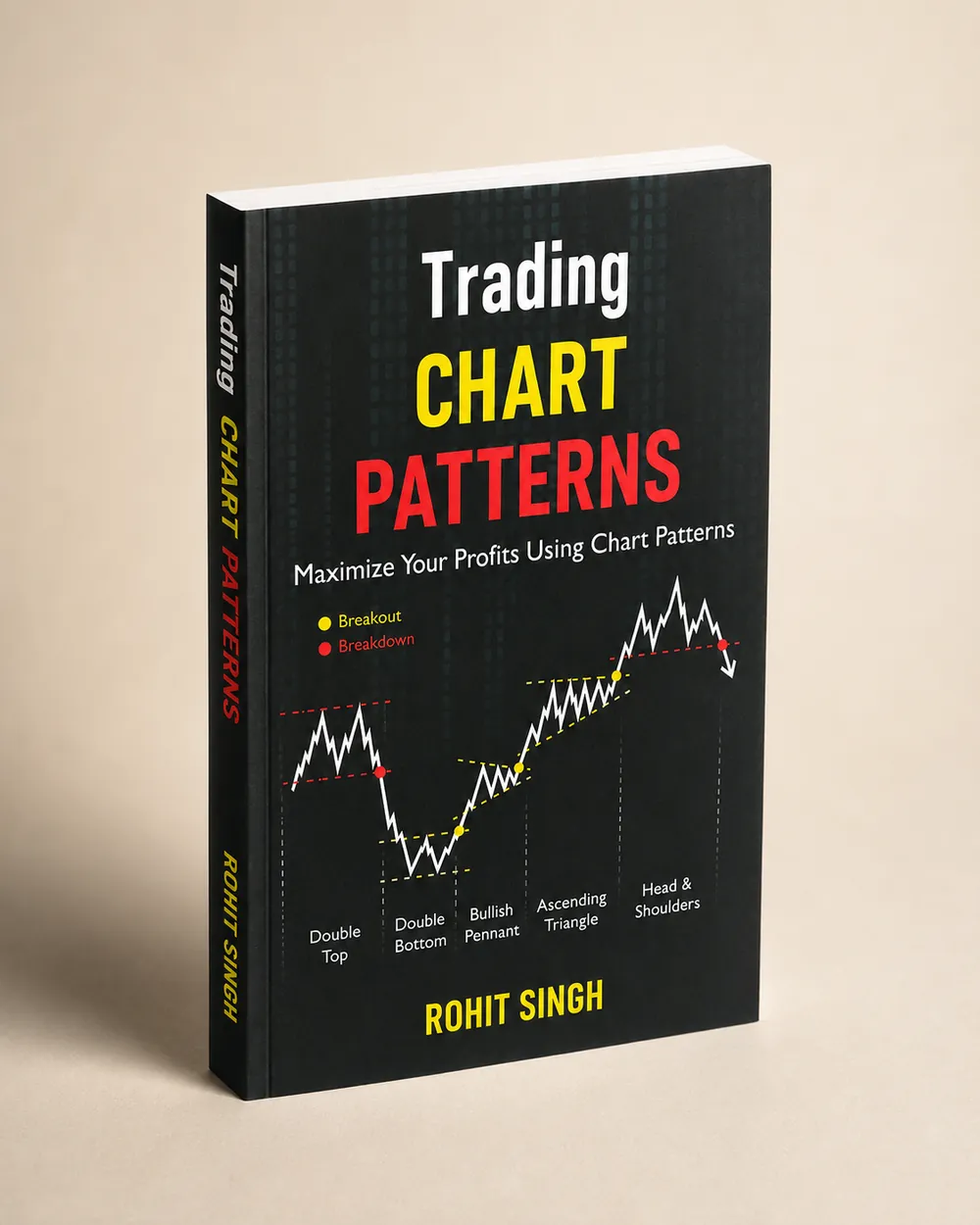
Flag & Polepattern.
A compressed bullish continuation structure: a sharp rally (the pole) followed by a short, narrow pause (the flag). The book describes it as a rectangle that never had time to mature because momentum stayed strong.
- Always a continuation structure.
- Pole first, then a brief, tight flag.
- Volume fades in the flag and returns at the breakout.
- The flag height frames risk and the first reference.
Idealised outline. The dashed yellow line is the support or resistance the book asks you to draw before naming the pattern.
How the book reads it
- 01
Structure — how to draw it
The pole is a near-vertical advance of wide bullish candles. The flag is a tight, brief consolidation between two parallel boundaries, either sideways or sloping mildly downward, and small relative to the pole.
- 02
Psychology — who is in control
Early buyers book some profit while new buyers wait for a better price. Sellers try to push lower but gain little ground. Quiet volume inside the flag suggests rest, not distribution.
- 03
Confirmation
The book looks for a decisive close above the flag’s upper boundary with a strong bullish candle and clear volume expansion. A retest of the broken flag line that holds is treated as additional confirmation.
- 04
Risk — where the idea is wrong
A deep return into the flag invalidates the continuation idea. The book bases both the stop distance and the first measured move on the flag’s height, and uses the pole’s length as a reference for an extended move.
- 05
Common trap
Treating an intraday poke above the flag as a breakout is a common error. The book also notes that the pattern belongs inside an established uptrend; without that context the structure loses meaning.
On real charts
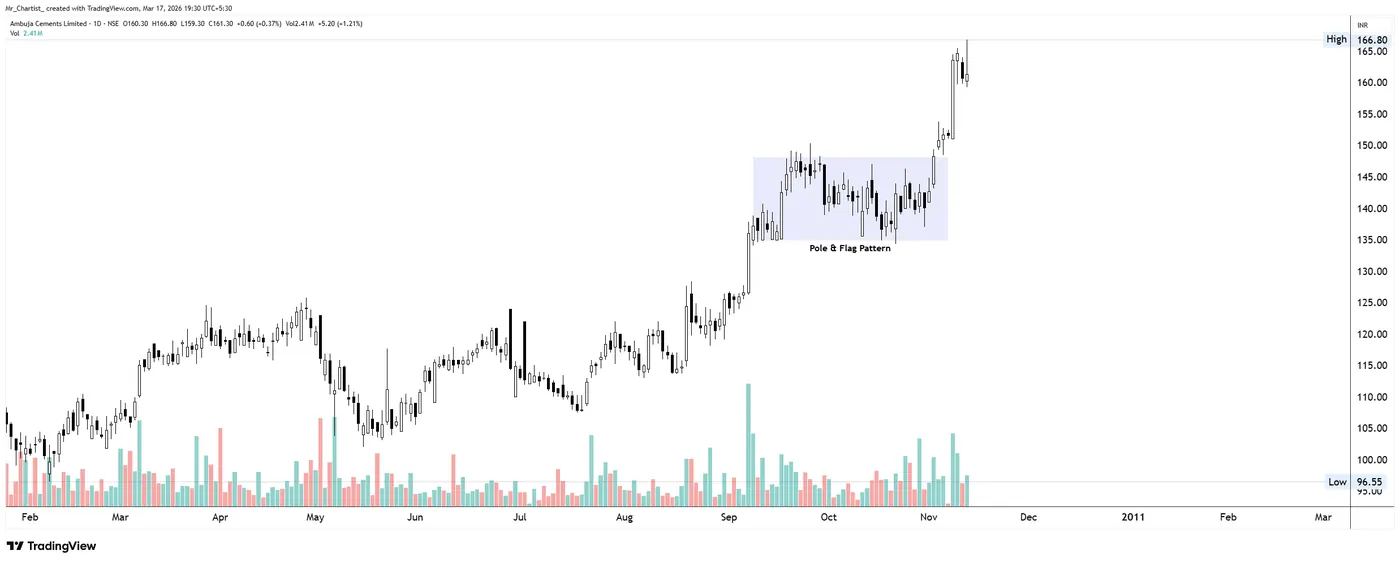
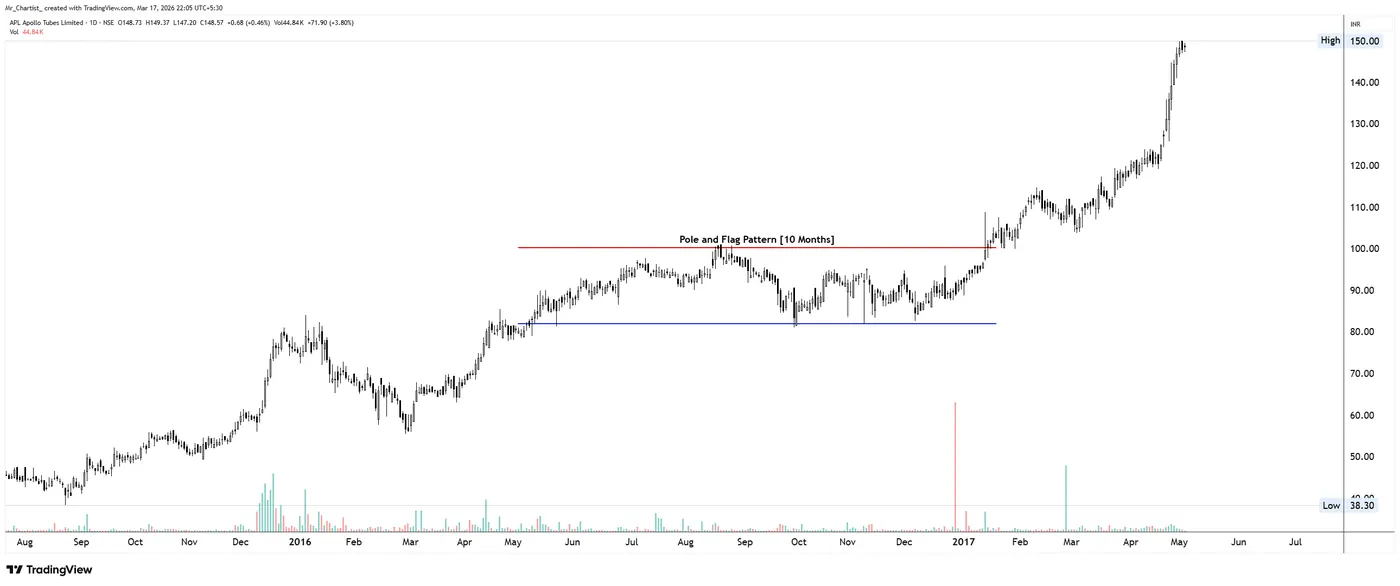
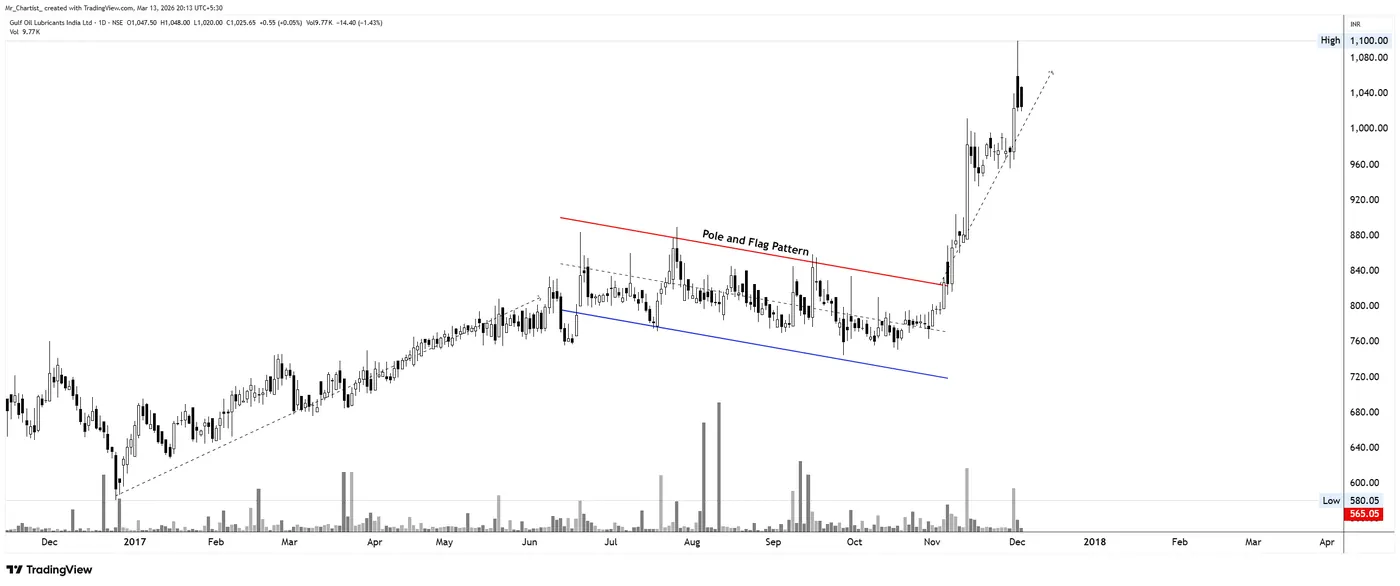
Annotated by Mr. Chartist for the book: the structure, the breakout, the pattern's height and the level that proves the idea wrong. Historical charts for education — not a view on any stock today.
More horizontal patterns
Fixed decision zones where repeated reactions create price memory, balance, and eventual expansion.
From the book · Horizontal support & resistance
The full Flag & Pole chapter — in the book.
Development stages, volume behaviour, breakout quality, traps and more annotated case studies.