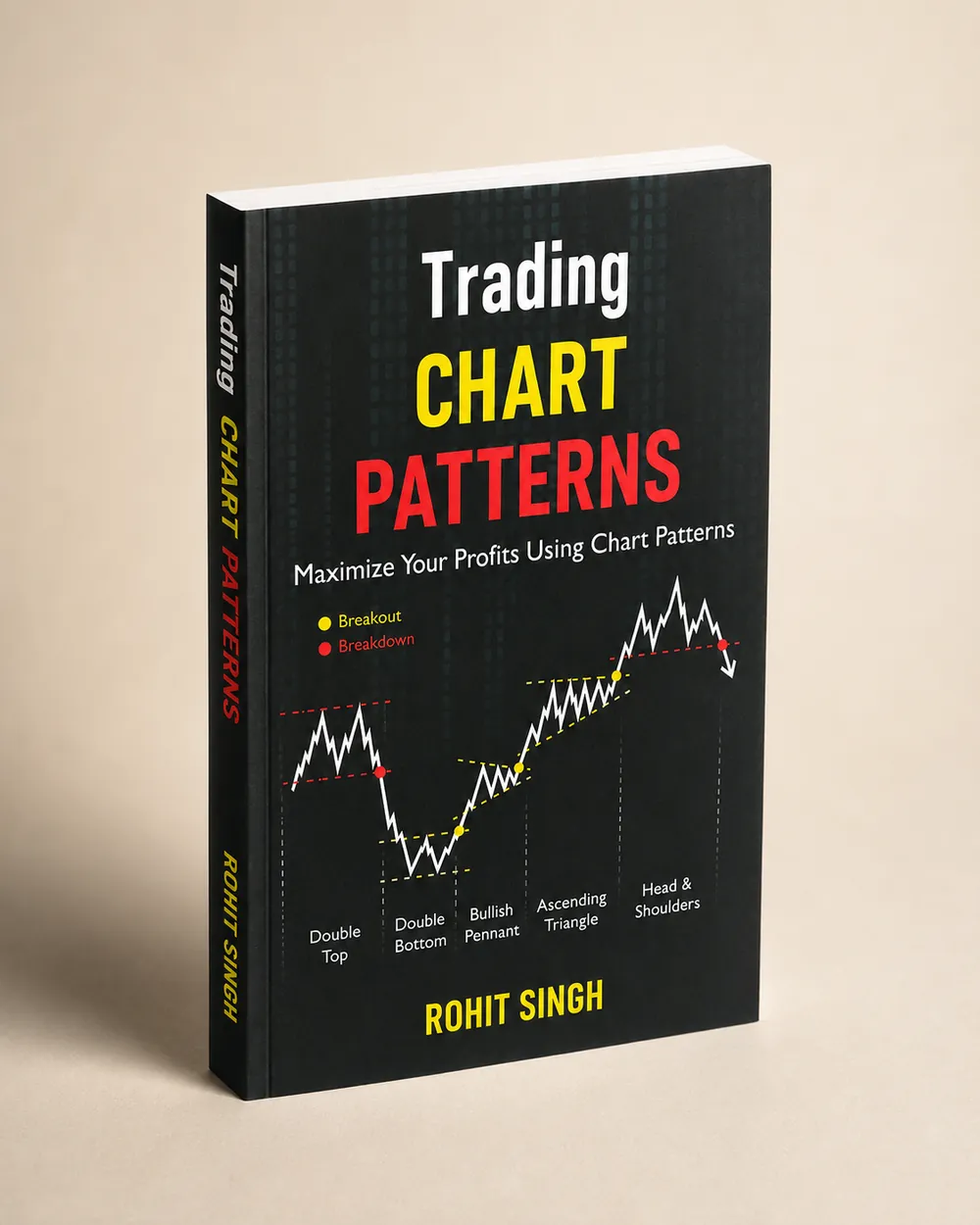
Cup & Handlepattern.
A rounded base beneath horizontal resistance, followed by a shallow pause near the top. The book describes it as quietly strong and most effective as a bullish continuation within an established uptrend.
- Flat resistance, rounded cup, shallow handle.
- Best within an established uptrend.
- Handle stays in the upper part of the cup.
- Stop reference is the handle low.
Idealised outline. The dashed yellow line is the support or resistance the book asks you to draw before naming the pattern.
How the book reads it
- 01
Structure — how to draw it
Mark the flat resistance first. Below it, price declines gently, forms a rounded base and rises back toward resistance (the cup), then pauses in a shallow consolidation in the upper part of the cup (the handle).
- 02
Psychology — who is in control
Supply is absorbed gradually without panic. Buyers hold but do not chase; in the handle, weak holders exit and a final push lower fails, suggesting that selling pressure is largely exhausted.
- 03
Confirmation
The book requires a decisive close above the horizontal resistance, ideally a strong bullish candle with expanding volume. A retest of the broken resistance that holds as support reinforces the structure.
- 04
Risk — where the idea is wrong
The book places the stop just below the lowest point of the handle; a decisive fall back into the handle signals failure. The cup’s depth projected from the breakout is the measured-move reference.
- 05
Common trap
Losing patience because the structure looks slow is the common error. The book also notes reduced reliability when the same shape forms in a weak or declining phase, and that a deep handle undermines the setup.
On real charts
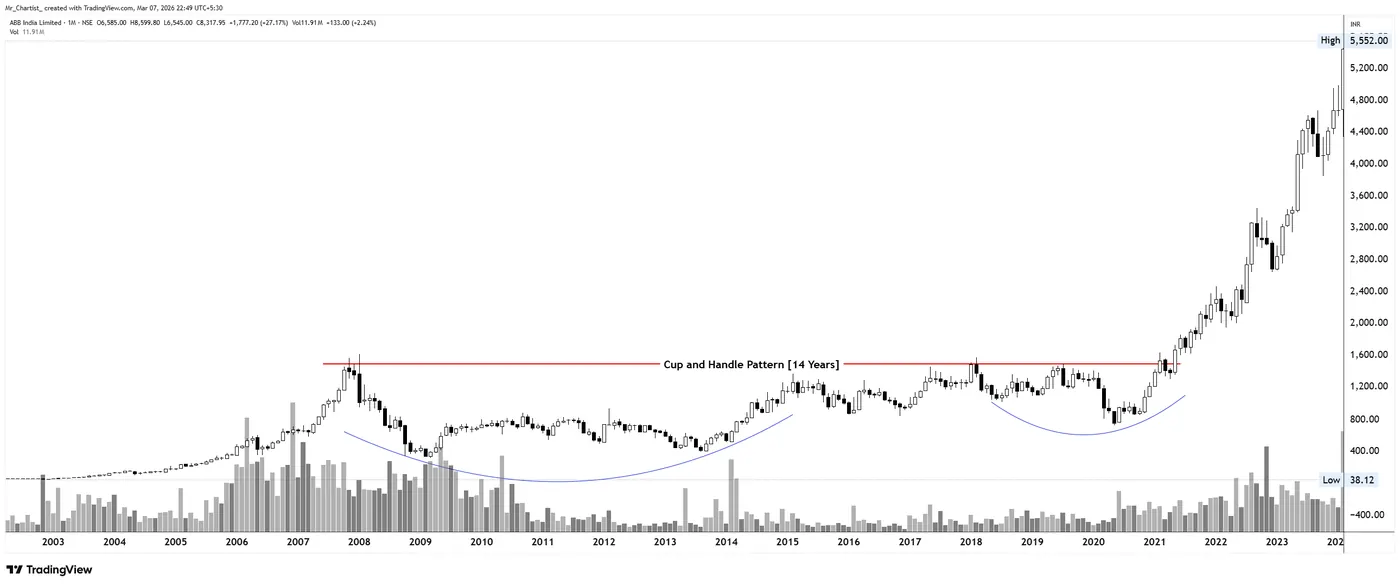
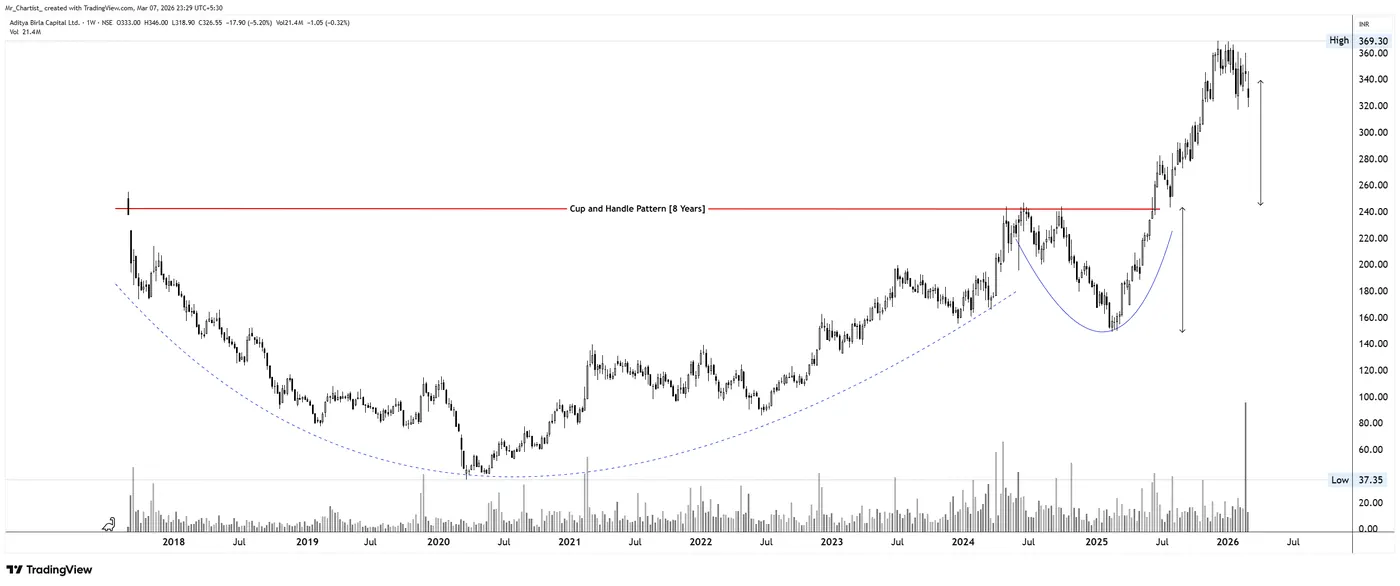
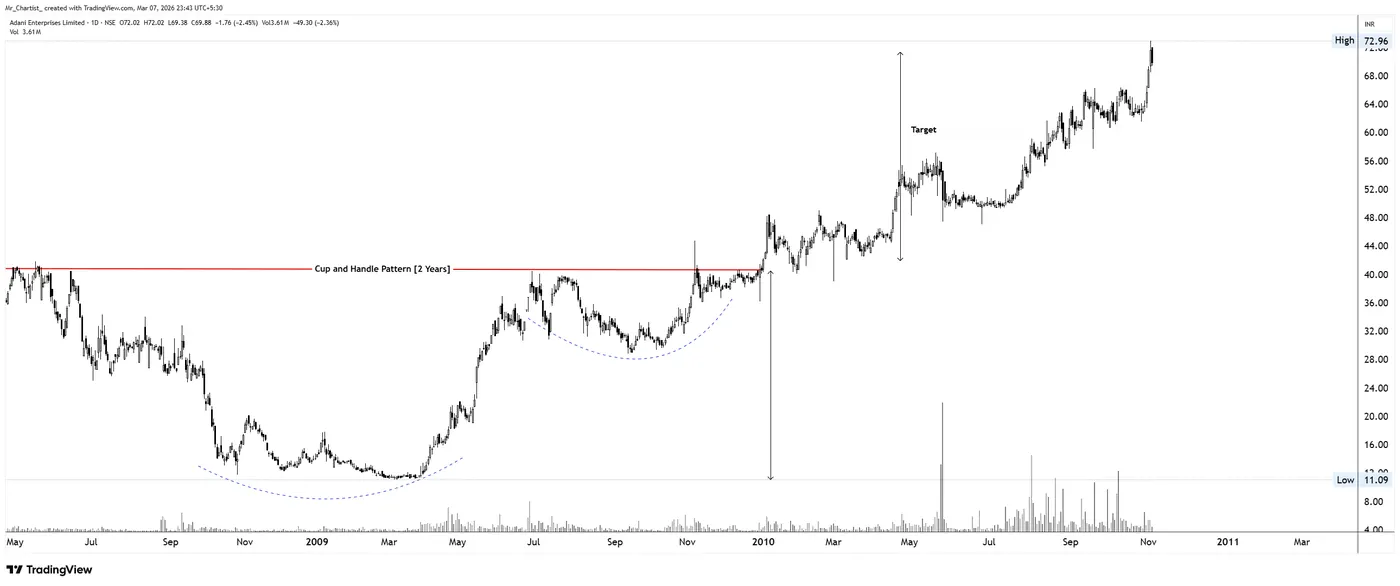
Annotated by Mr. Chartist for the book: the structure, the breakout, the pattern's height and the level that proves the idea wrong. Historical charts for education — not a view on any stock today.
More curved patterns
Gradual structures where control transfers over many candles before a decisive move develops.
From the book · Curved support & resistance
The full Cup & Handle chapter — in the book.
Development stages, volume behaviour, breakout quality, traps and more annotated case studies.