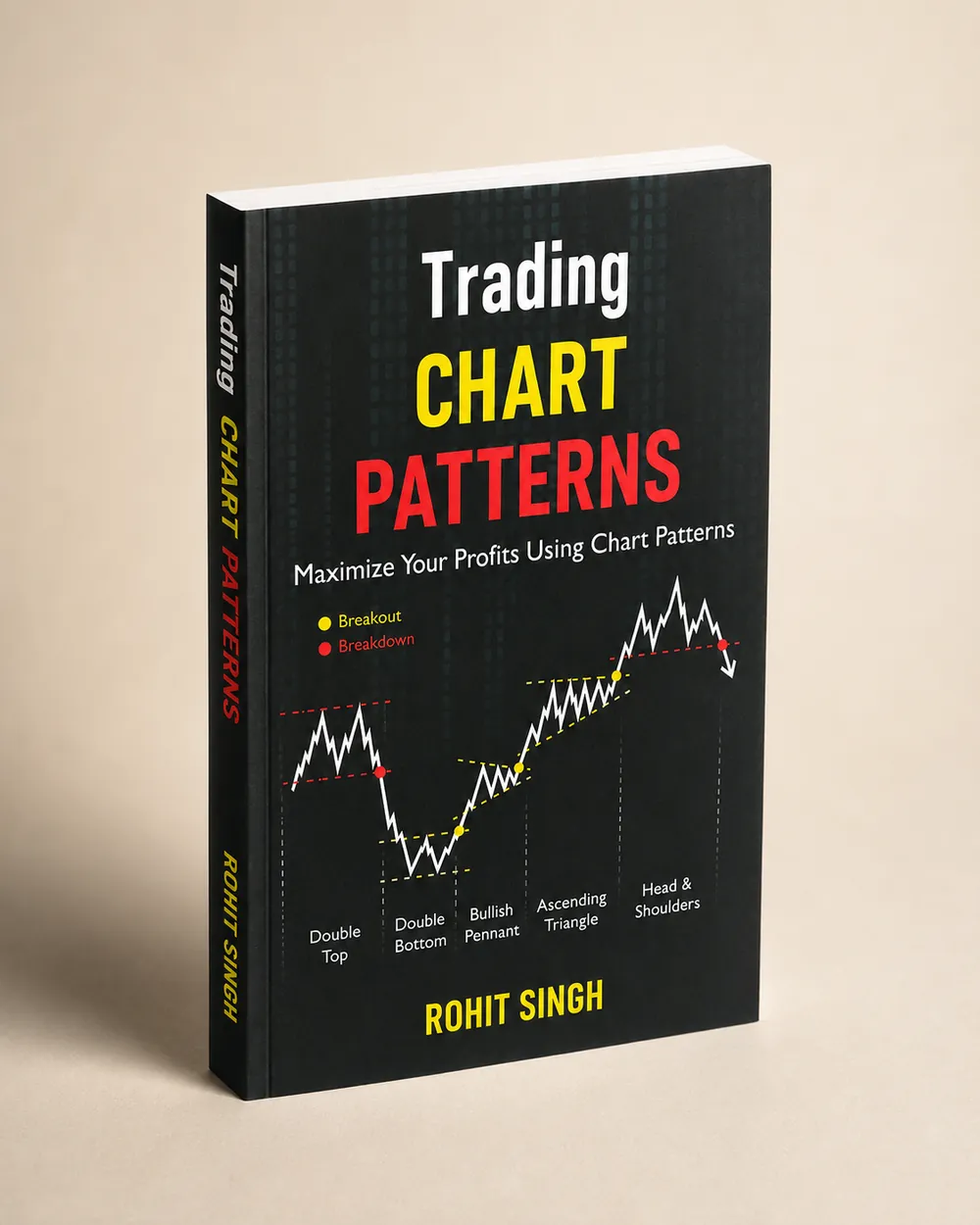
Inverted Head & Shoulderspattern.
A reversal structure after a downtrend built on the progressive failure of weakness. The book describes it as revealing strength that is already developing while price still looks depressed.
- Needs a clear prior downtrend.
- Higher right shoulder shows fading supply.
- Neckline close confirms the reversal.
- A return below the neckline invalidates.
Idealised outline. The dashed yellow line is the support or resistance the book asks you to draw before naming the pattern.
How the book reads it
- 01
Structure — how to draw it
Three troughs around a horizontal or slightly sloping neckline: a left shoulder, a deeper head and a higher right shoulder. The neckline joins the rebound highs between the troughs and is the decision level.
- 02
Psychology — who is in control
Sellers keep expecting continuation while buyers quietly accumulate into pessimism. The right shoulder, a decline that fails to reach the head, shows effort without result and marks control shifting to buyers.
- 03
Confirmation
The book requires a decisive close above the neckline, ideally a strong bullish candle with expanding volume. A retest of the neckline from above that holds adds confirmation.
- 04
Risk — where the idea is wrong
The book’s common invalidation is below the right shoulder low or the neckline retest zone; a sustained fall back below the neckline is treated as failure. The head-to-neckline distance is the measured-move reference.
- 05
Common trap
Treating every bounce as a selling opportunity, and so missing the shift, is the trap described. The book also notes reduced reliability without a prior downtrend or in sideways or already strong markets.
On real charts
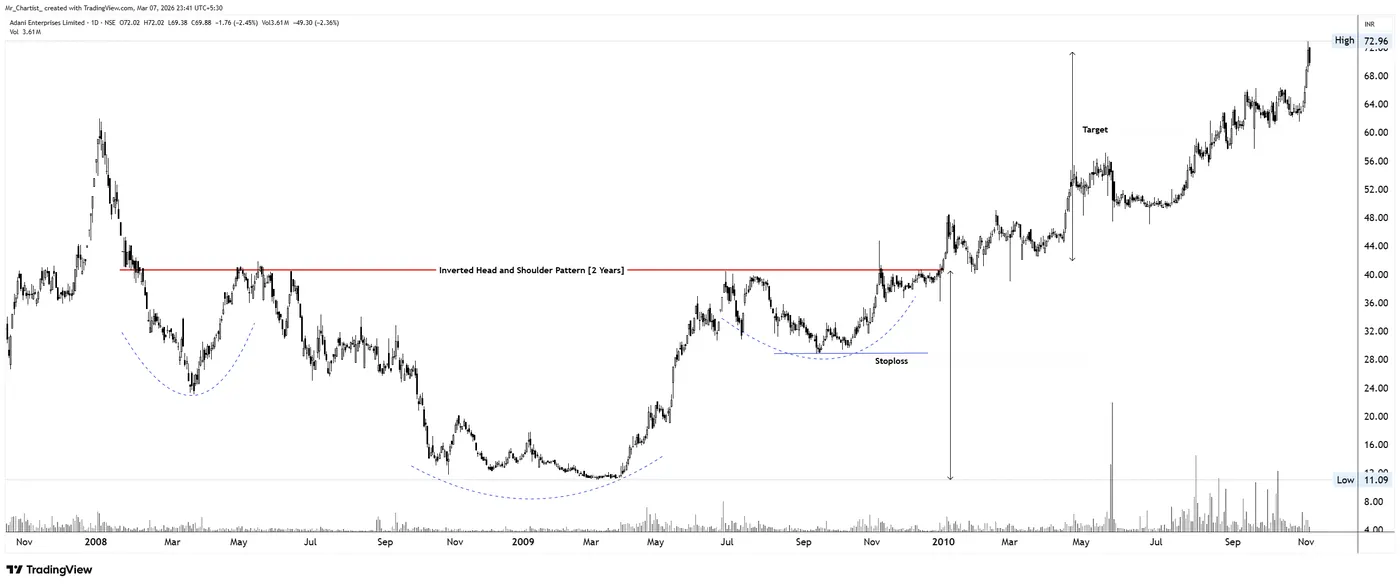
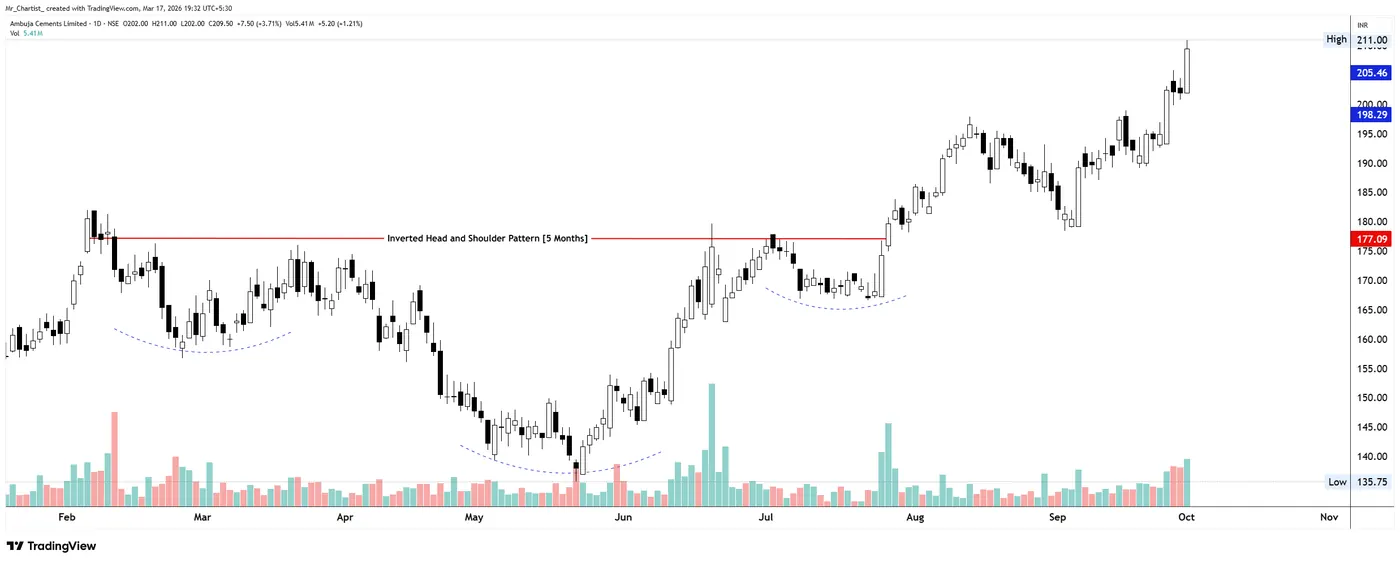
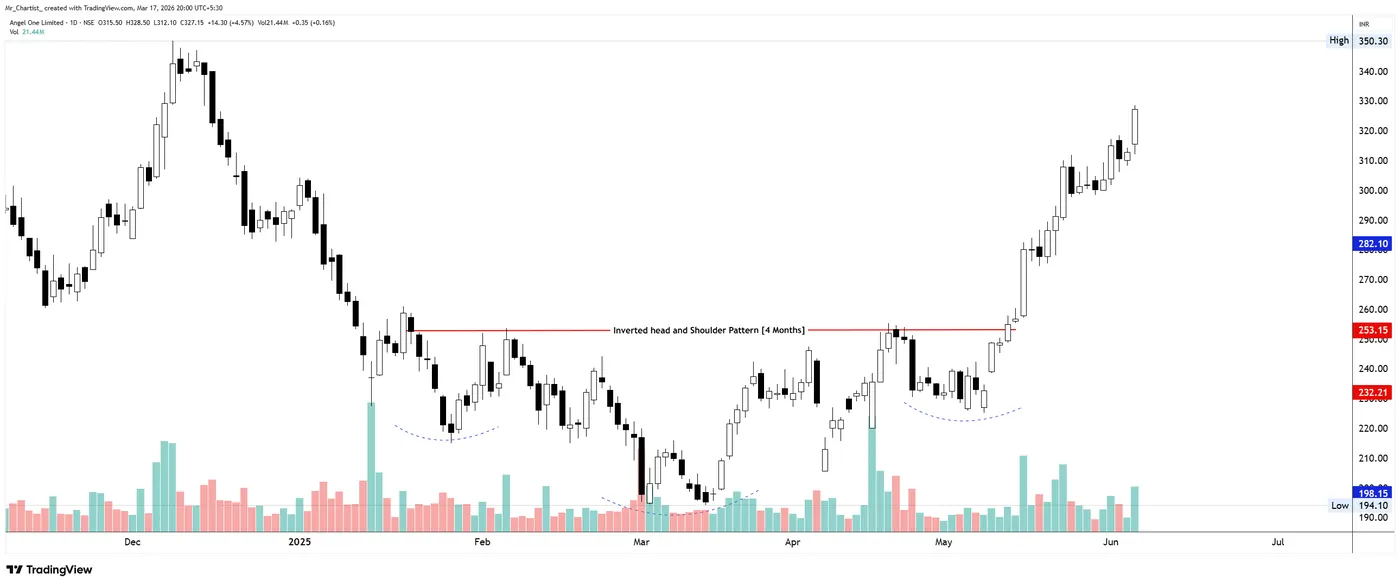
Annotated by Mr. Chartist for the book: the structure, the breakout, the pattern's height and the level that proves the idea wrong. Historical charts for education — not a view on any stock today.
More curved patterns
Gradual structures where control transfers over many candles before a decisive move develops.
From the book · Curved support & resistance
The full Inverted Head & Shoulders chapter — in the book.
Development stages, volume behaviour, breakout quality, traps and more annotated case studies.