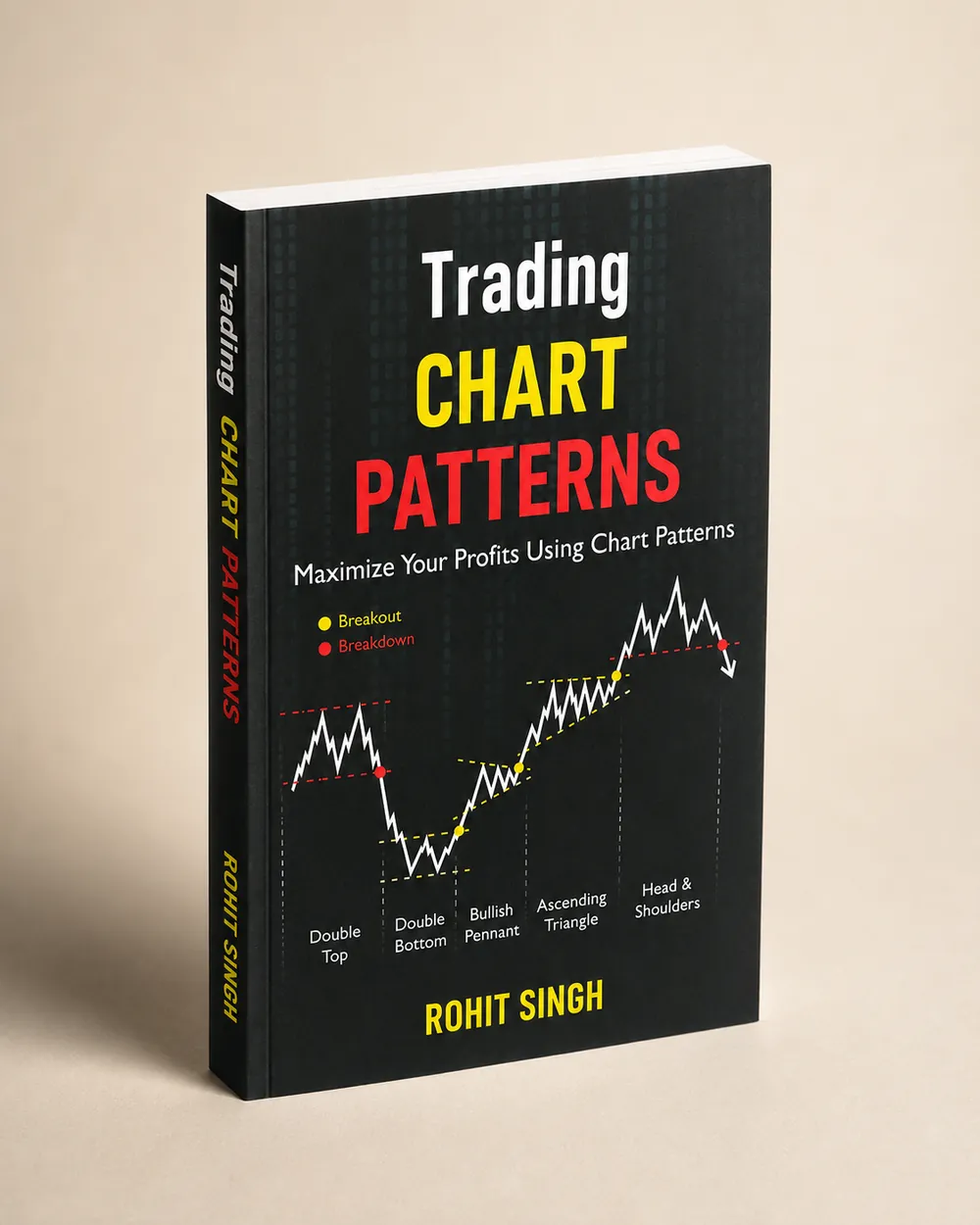
Curvepattern.
A gradual transition in which one side of the structure bends smoothly while the other stays flat. The book presents bullish and bearish versions and treats the curve as preparation; the flat level is where the decision happens.
- Curved side shows preparation, flat side shows decision.
- Exists in bullish and bearish forms.
- Gradual, not sharp, like a V-turn.
- Close beyond the flat level confirms.
Idealised outline. The dashed yellow line is the support or resistance the book asks you to draw before naming the pattern.
How the book reads it
- 01
Structure — how to draw it
Mark the horizontal decision level first. In the bullish form, price builds a rising curved support beneath flat resistance; in the bearish form, a falling curved resistance above flat support, with several reactions along the curve.
- 02
Psychology — who is in control
Control shifts slowly, without panic or urgency. In the bullish form buyers absorb supply patiently, so each pullback holds higher; in the bearish form sellers absorb demand, so each rally peaks lower.
- 03
Confirmation
The book requires a decisive close beyond the flat level, ideally a strong candle with expanding volume. A retest of the broken level that respects the role reversal reinforces the reading.
- 04
Risk — where the idea is wrong
The book uses a mid-pattern stop based on half the curve’s height measured from the flat level, and the curve’s full height projected from the breakout as the measured-move reference.
- 05
Common trap
A V-shaped turn is not a curve; it reflects emotion, not absorption. The book also warns that a rounding that forms too quickly, or that loses its higher lows, may only be a temporary reaction.
On real charts
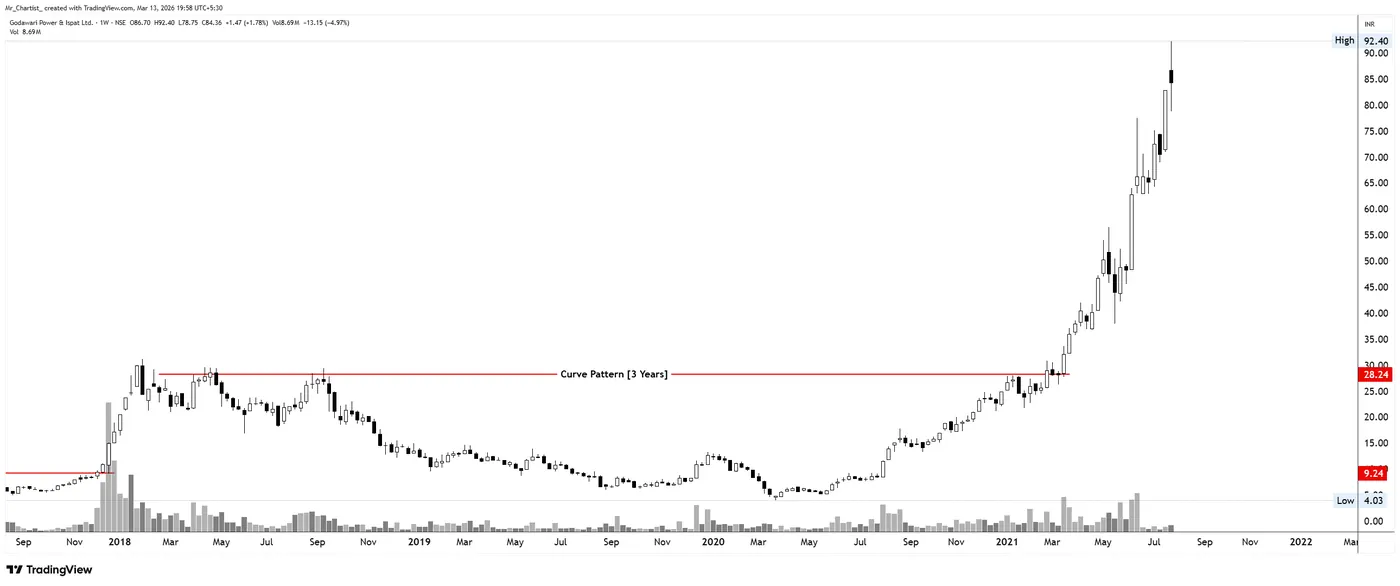
Annotated by Mr. Chartist for the book: the structure, the breakout, the pattern's height and the level that proves the idea wrong. Historical charts for education — not a view on any stock today.
More curved patterns
Gradual structures where control transfers over many candles before a decisive move develops.
From the book · Curved support & resistance
The full Curve chapter — in the book.
Development stages, volume behaviour, breakout quality, traps and more annotated case studies.