Pennantpattern.
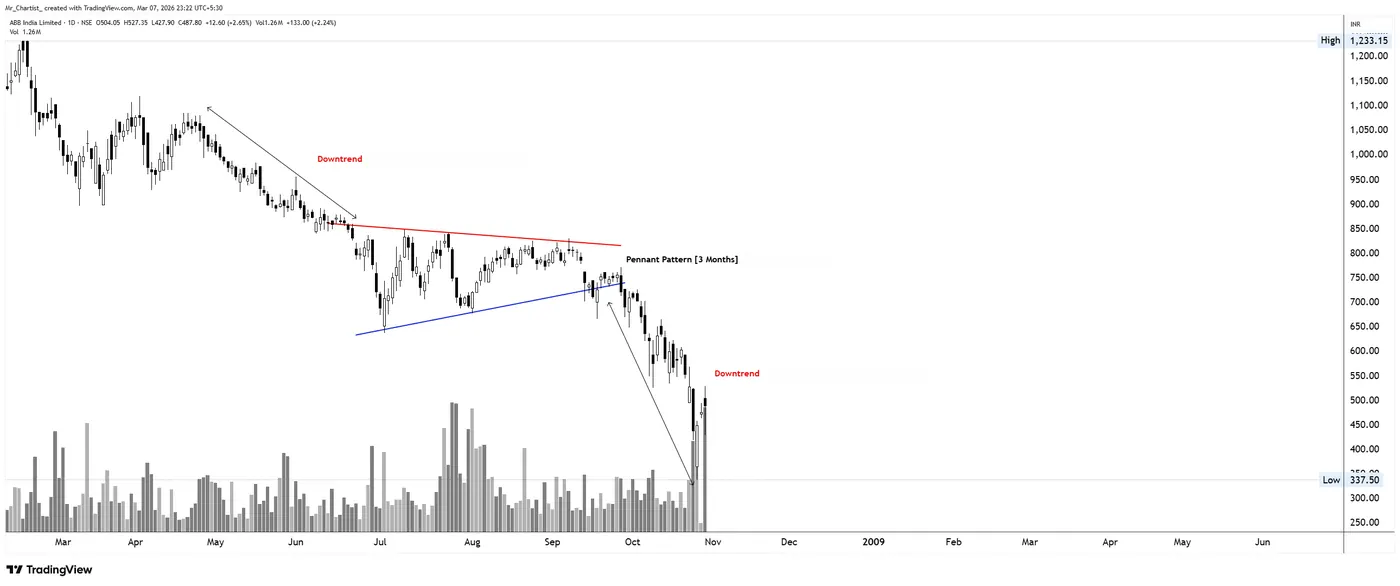
A short, tight compression after a sharp move, resolving in the direction of that move. The book describes it as a fast version of the symmetrical triangle and treats it only as a continuation pattern, in bullish and bearish forms.
- Needs a strong pole before it.
- Resolves in the direction of the pole.
- Short and tight, unlike a full triangle.
- Stop sits outside the pennant structure.
Idealised outline. The dashed yellow line is the support or resistance the book asks you to draw before naming the pattern.
How the book reads it
- 01
Structure — how to draw it
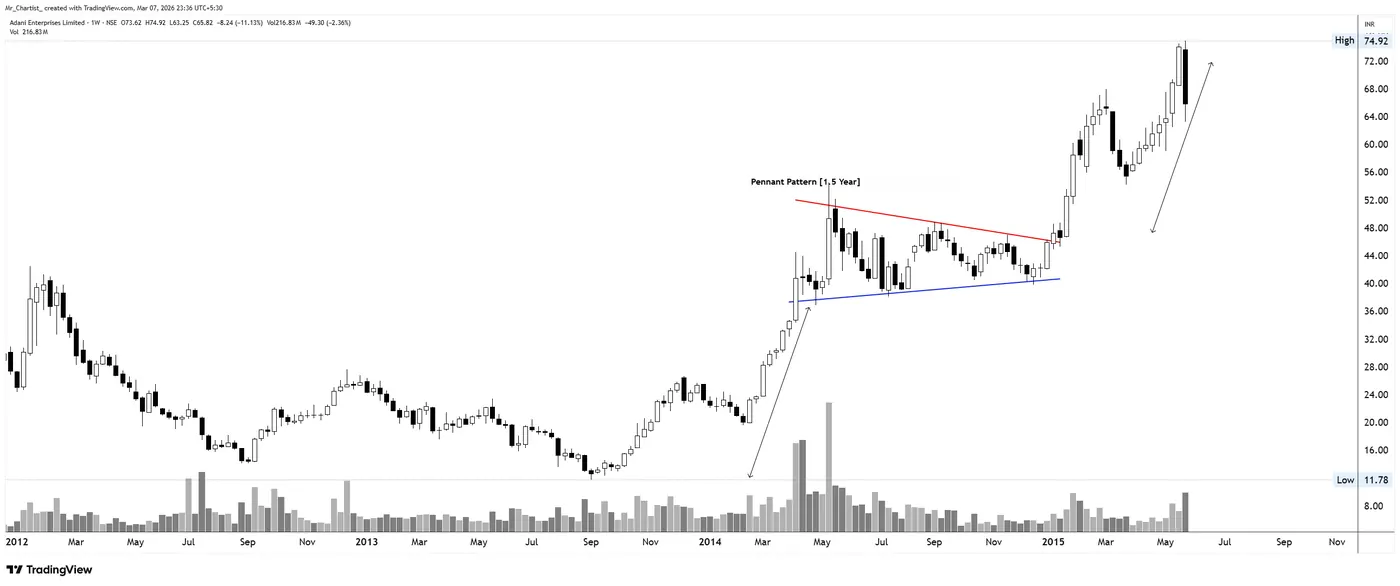
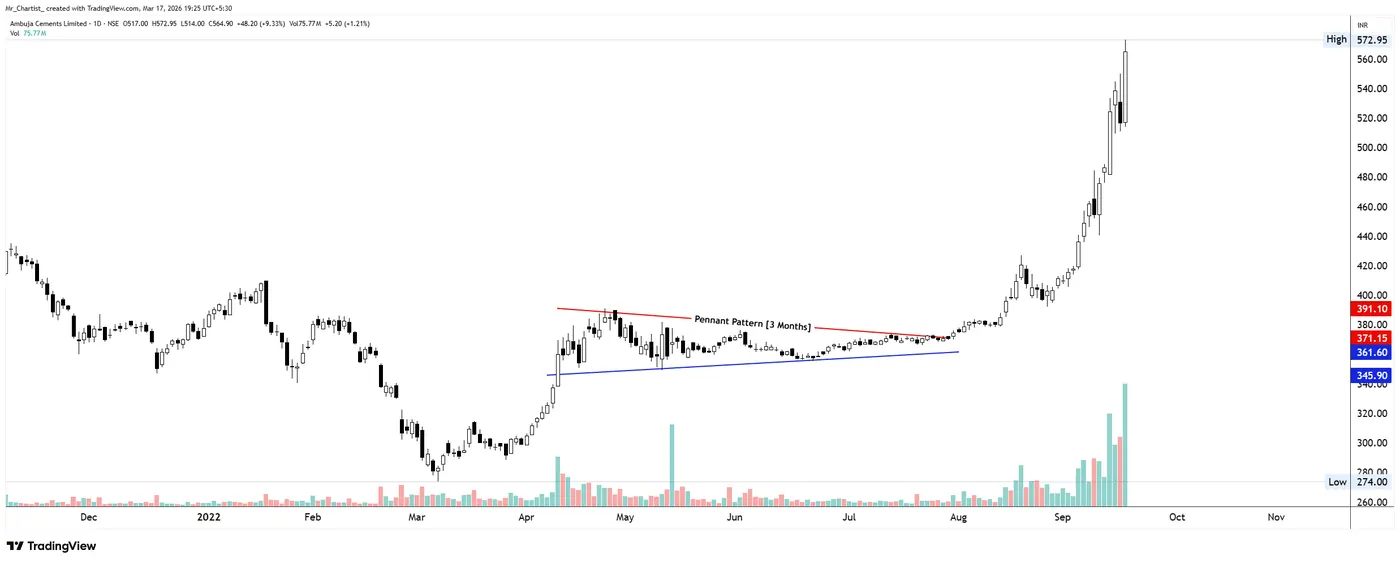
Start with the pole, an aggressive one-sided move of wide candles. Then draw two quickly converging trendlines around the small consolidation that follows. The pennant stays compact and forms relatively quickly.
- 02
Psychology — who is in control
After the impulse, early participants book partial profit and newcomers hesitate to chase. Counter-trend attempts lack follow-through, so price compresses instead of reversing; strength or weakness is resting, not changing hands.
- 03
Confirmation
The book requires a decisive close outside the pennant in the direction of the pole, ideally with expansion in range or volume. A retest of the broken line that respects the role reversal adds weight.
- 04
Risk — where the idea is wrong
The book places the stop outside the pennant, beyond the opposite trendline or the last swing inside it. The pole’s length, projected from the breakout, is used as the measured-move reference.
- 05
Common trap
Confusing a pennant with a broader triangle near a turning point is a common error; the book says pennants do not usually appear at major tops or bottoms. A breakout that falls back inside is treated as weak.
On real charts
Annotated by Mr. Chartist for the book: the structure, the breakout, the pattern's height and the level that proves the idea wrong. Historical charts for education — not a view on any stock today.
More diagonal patterns
Rising or falling boundaries that reveal changing momentum, participation, pressure, and direction.
From the book · Diagonal support & resistance
The full Pennant chapter — in the book.
Development stages, volume behaviour, breakout quality, traps and more annotated case studies.